
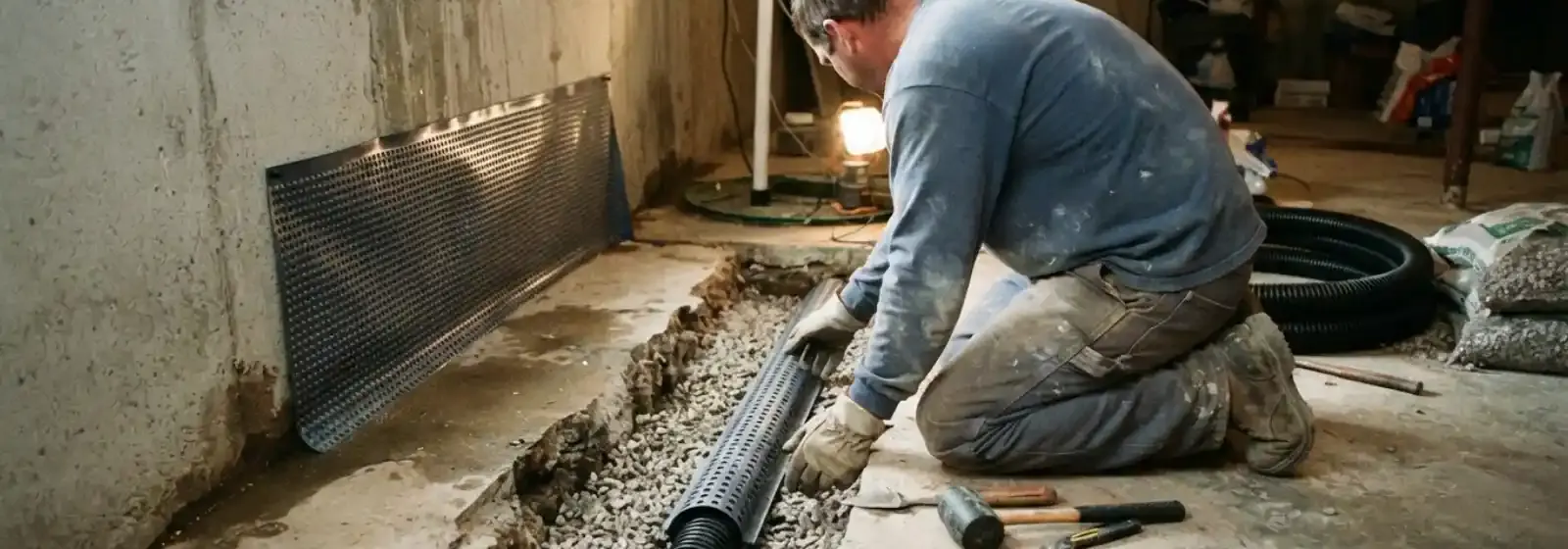
Exterior basement waterproofing cost depends on how much earth has to come out, how much wall gets treated and what has to be rebuilt on top afterward. We do not list dollar figures here, because a number without a site visit is a guess, and a bad guess helps nobody. What we can do is show you the pieces behind a bid.
Exterior work means digging down along the outside of the foundation, cleaning and sealing the wall, adding drainage and then backfilling. It is a large job compared with sealing cracks from inside, and the price usually reflects labor and restoration more than materials.
If you are weighing bids for a damp basement in Wheat Ridge, the sections below explain each cost driver, compare interior and exterior approaches and flag the dig-safety call you must make before anyone breaks ground.
Eight factors that set the price of an exterior job
Depth of excavation
A wall that sits eight feet below grade needs far more digging and shoring than a shallow one. Deeper trenches also take more time and equipment.
Length of wall
Cost scales with linear feet treated. Treating one side differs from wrapping the whole house.
Access
A tight side yard may need a mini excavator or hand digging. A wide open lot allows a full-size machine.
Drain tile
New perimeter drain, often a perforated pipe in washed gravel, carries water to a discharge point. Length and fall both matter.
Membrane and coating
Options range from a sprayed coating to a rubberized sheet membrane with a dimple board. The wall must be cleaned and repaired first.
Sump system
If the drain tile needs a pit and pump to move water out, add the basin, pump, check valve and discharge line.
Landscaping and concrete
Patios, stairs, decks, fences and flower beds in the dig zone must be removed and rebuilt, and restoration can rival the waterproofing itself.
Permits and inspection
Fees, plans and inspections vary by city and scope. Ask the building department which apply to your address.
Interior drainage vs exterior waterproofing side by side
| Question | Interior drain system | Exterior waterproofing |
|---|---|---|
| Where is the work? | Inside, along the footing under the slab edge | Outside, along the foundation wall |
| What does it do? | Collects water that enters and sends it to a sump | Keeps water from reaching the wall at all |
| Disruption | Basement floor is cut and patched | Yard, plants and hardscape are dug up |
| Main cost driver | Length of floor cut and sump setup | Depth, access and restoration |
| Best fit | Finished exterior is hard to disturb or access is poor | Wall damage, accessible perimeter, long-term sealing |
Neither option is always better. Some houses use both, with a membrane outside and a sump inside as a backup. A fair bid explains why the contractor picked one approach and what happens if the first fix falls short.
From trench to backfill: the four stages you are paying for
Dig and expose
Soil is removed to the footing, with shoring in deep or unstable trenches.
Repair and seal
The wall is cleaned, cracks are patched and the membrane or coating goes on.
Drain and protect
Perimeter drain tile is laid in gravel and a drainage board shields the membrane.
Backfill and restore
Soil is returned in lifts, graded away from the house, and surface features are rebuilt.
Grading deserves attention. The soil around the house should slope away, because even a perfect membrane faces more water if the surface feeds toward the wall. Downspout extensions and a clear gutter system cost little compared with the excavation, so many homeowners fix those first.
Questions to ask before you accept a bid
Ask each contractor to describe what is included, line by line. A short bid that says only waterproofing basement tells you nothing. A useful one states the linear feet, the depth, the membrane type, the drain and discharge plan and what is left unrestored.
Ask where the water will go. A drain tile line needs a legal place to discharge, such as daylight on a slope or a sump pit. Pumping water onto a neighbor's lot or into the sanitary sewer causes trouble later.
Ask what the sump system includes. If a pump is part of the plan, you want to know the basin size, whether there is a battery backup and where the discharge pipe exits. Our sump pump page explains how those parts fit together.
Finally, ask what happens if hidden damage turns up behind the soil, such as a failed footing or an old drain line. A contractor who has thought about that question is likely to have thought about the rest.
When interior work or drainage fixes are enough
Not every damp basement needs a trench. A small seep at a floor crack may only need a repair and better surface drainage. A downspout dumping at the foundation corner is a frequent culprit, and moving it costs a fraction of any excavation.
A plumber can help sort what is happening, including whether a supply leak or a failed sump is mimicking seepage. Our basement waterproofing page lays out the options we handle. If the cause is outside the house, an honest plan may start with grading and gutters before any digging.
The code behind most plumbing work is a model code such as the UPC or the IPC, adopted with local changes, and the Wheat Ridge Building Division can say which edition governs your project.
Wheat Ridge note: call 811 before any digging near the foundation
Colorado law requires you to contact Colorado 811 at least three business days before you dig, at colorado811.org or by calling 811, whatever the size of the project. Utilities get marked with paint or flags, and you dig with hand tools when you are within 18 inches of a mark. The service covers public utilities only, so privately owned lines such as a yard sprinkler feed or a private sewer lateral may not be marked.
That matters on a foundation job because the trench runs close to the house, where service lines often enter. Ask your contractor who places the 811 request and whether privately owned lines will be located separately. Do not let anyone start the machine before the marks are on the ground.
Clear Creek flows through Wheat Ridge, and Lena Gulch crosses the southwest part of the city. Those waterways are part of the local geography, but they do not tell you what the soil or groundwater is doing at your lot. A site visit and a careful look at drainage around your house are the only reliable answers.
Permit rules vary, so ask the Wheat Ridge Building Division before you commit. For homes near the Arvada border, see our Arvada plumbing page, and for other towns we cover, use the service area page.
Common questions
Why do exterior waterproofing bids differ so much?
Because the scope differs. One bid may treat a single wall with a coating while another wraps the full perimeter with a sheet membrane, drain tile and a pump. Compare bids line by line: linear feet, depth, materials and restoration.
Does the price include landscaping and concrete repair?
Not always. Many bids stop at backfill and leave patios, steps and plantings to you. Ask for restoration to be listed separately so you can compare fairly.
Do I need a permit for exterior waterproofing in Wheat Ridge?
Permit rules vary, so ask the Wheat Ridge Building Division at (303) 235-2855, option 1. The city says a permit is required for alterations, and your scope may include drain, sump or structural repair.
Is Clear Creek a reason my basement is damp?
Not by itself. Proximity to a creek does not prove how wet your soil is. Check the grading, gutters and downspouts first, then have a professional look at the foundation wall and floor.
Can I dig the trench myself to save money?
Digging along a foundation is risky. Colorado 811 must be called at least three business days ahead, deep trenches can collapse, and exposed footings can shift. Most owners are better off hiring the excavation and doing surface grading themselves.
Can a property manager get a bid for a rental building?
Yes. Landlords and managers should ask for a written scope, a plan to protect tenants during the work and a schedule. For a clear price tied to your building, call (303) 552-3896.