
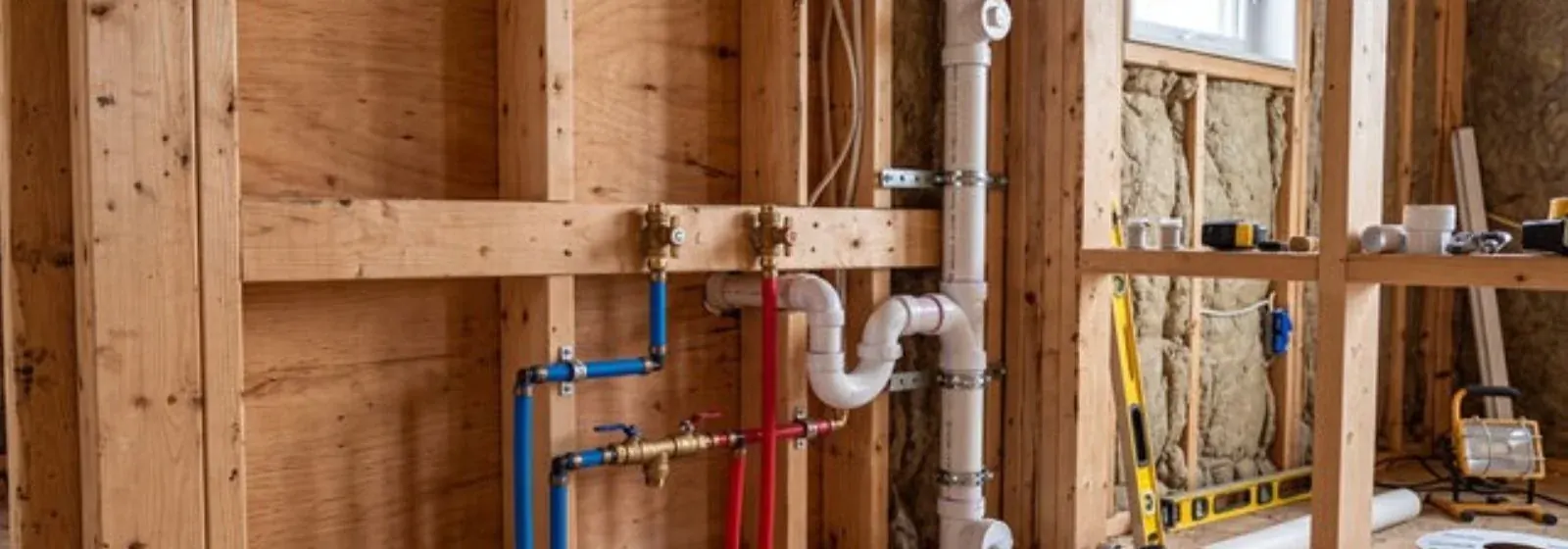
Repiping means replacing the water supply lines inside a house, either all of them or one section, with new pipe. In Wheat Ridge it is usually planned work, though a burst line can move the schedule up and the 24/7 line is there if one does.
The goal is steady pressure, clean water and no more repeat repairs. Because the job opens walls and shuts water off for a day or more, it helps to know what drives the decision before anyone cuts drywall.
Signs galvanized or old copper pipe is wearing out
Galvanized steel rusts from the inside, narrowing the bore until flow drops. Old copper tends to fail through pinholes, pitting and green corrosion at joints.
Brown or rusty water
Discolored water, especially after the tap sits unused, often comes from corroding galvanized pipe.
Weak flow at several fixtures
Scale and rust narrow the pipe so a shower trickles even with good street pressure.
Repeat pinhole leaks
A second or third small leak in the same run suggests the whole line is thinning.
Green or blue stains
Crust on copper joints and fittings points to corrosion that may spread.
Metallic taste or odor
Water that tastes of metal can indicate pipe deterioration.
PEX versus copper for a replacement
| Feature | PEX | Copper |
|---|---|---|
| Flexibility | Bends around corners, fewer joints | Rigid, needs elbows and more fittings |
| Installation | Faster, often fewer wall openings | Slower, soldered or pressed joints |
| Freeze tolerance | Expands somewhat before splitting | Splits when water freezes inside |
| Heat and sunlight | Not for sun exposure or near flues | Handles heat and sits outdoors if needed |
| Lifespan | Typically decades, material dependent | Typically many decades when water chemistry is mild |
Both are accepted choices for supply piping. We recommend one based on your layout, your wall access and any exposed runs.
Pipes failing again?
Call and we will look at the whole line.
Partial repiping or the whole house
Partial repipe
- Replaces one failing branch, such as a bathroom or kitchen run.
- Lower cost and less wall opening.
- Old pipe remains elsewhere and may fail later.
Whole-house repipe
- Replaces every supply line from the main to the fixtures.
- One project, one set of wall repairs.
- Best when galvanized runs through the whole home.
Mixing old galvanized with new copper can speed up corrosion at the joint, so we use proper dielectric unions where the two meet.
Drywall access and what to expect
New lines have to reach the fixtures, so some drywall comes down. We cut small, planned openings, often in closets, behind plumbing walls or at the bottom of a wall, and route pipe through attics, basements and crawlspaces where we can.
Water is shut off during the work, and most homes can use a bathroom or kitchen again once each section is tested. Patching and painting are normally done by a drywall contractor afterward, so plan for that finish step.
How a repipe is planned and finished
Assess
We trace the existing lines and note materials, access and fixture count.
Plan
We agree on the route, the pipe type and the number of openings.
Replace
We install new lines, connect fixtures and remove or abandon the old pipe.
Test
We pressure test every joint before closing walls.
What to do before a repipe gets scheduled
If a pipe is leaking now, shut the main valve and open a low faucet to drain the line. Do not wrap or paint over a corroded joint and call it fixed, since old galvanized steel can fail beside the patch.
When to call right away: brown water at every tap, a wet wall or ceiling, or pressure that drops fast. Clear furniture and valuables from walls where openings will be cut.
Permits and providers in Wheat Ridge
Permit rules vary, so ask the Wheat Ridge Building Division, whose permit desk handles questions and reviews plans through the city's online portal. When a licensed plumbing contractor does the work, state rules make the contractor responsible for the permit and for any inspection.
Wheat Ridge is served by several water providers, including Denver Water, Consolidated Mutual, Valley Water and the Wheat Ridge Water District. Your bill names yours. A new interior system does not change the service line outside, so ask us about water line repair if your pressure stays low.
Installers in Colorado work to a model plumbing code, commonly the UPC or IPC family, with local amendments, so the permit desk is the place to confirm what applies at your address.
What affects the price of repiping
Cost follows the number of fixtures, the pipe material, the size of the house and how much wall access is needed. A single-story home with an open attic costs less than a multi-story one with finished ceilings.
Insurance usually does not pay for a planned repipe, though water damage from a sudden failure may be covered. Call (303) 552-3896 and we will explain the price before work starts.
Common questions
How do I know if my pipes are galvanized?
Galvanized pipe looks gray and dull, and a magnet sticks to it. Copper is orange-brown and a magnet will not stick.
Can you repipe just one part of the house?
Yes. A partial repipe replaces the failing branch. We tell you if the rest of the pipe looks close to failing.
Is PEX safe for drinking water?
Approved PEX is made for potable water and is widely installed. We use fittings designed for the type of pipe.
How long will my water be off?
It depends on the house size and how many openings are needed. We explain the schedule so you can plan around it.
Do I need a permit to repipe?
Permit rules vary, so ask the Wheat Ridge Building Division. A licensed contractor pulls the permit when one is required.
I own a rental property. Can you repipe while it is occupied?
Often yes, with notice to tenants and a plan for water shutoffs. We coordinate timing with you.
Where this fits with other work
If a pipe has already split, start with burst pipe repair, and if you only suspect a hidden leak, leak detection can confirm where it is.
Homeowners in Arvada can also request this work from our Wheat Ridge dispatch.