
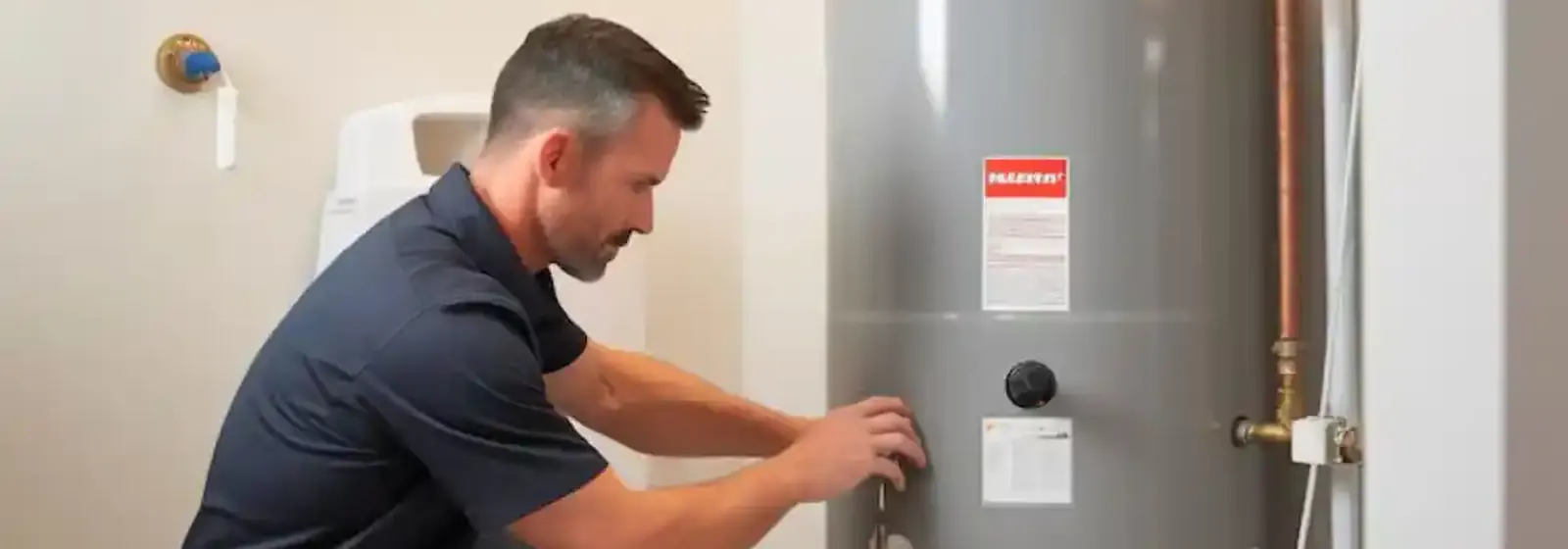
Water heater installation in Wheat Ridge is the scheduled setting of a new tank in a new spot or in place of a working older unit. You choose the day, we bring the parts, and the permit question is sorted out beforehand. This is the calm version of the job, with no puddle on the floor.
Typical reasons are a remodel, a move to a different fuel, a unit that has reached the end of its range or a new building. Tank heaters often last roughly 8 to 12 years, so planning a swap at year ten avoids a surprise failure.
What an installation visit includes
Site check
We measure the space, confirm the gas line or circuit and review the vent path.
Old unit out
The existing tank is drained, disconnected and removed.
New unit in
The heater is set level, with new supply connectors, shutoff valve and discharge line.
Safety checks
We test relief valve, pressure, combustion draw or electrical load, and walk you through the controls.
Setting the temperature is part of the handoff. Many households use a setting around 120 degrees Fahrenheit to limit scald risk, and we can adjust it for your needs.
Permits and code checks for a planned install
Planned work gives you time to check permit requirements before the old unit comes out. Permit rules vary, so ask the Wheat Ridge Building Division, which reviews plans, issues permits through its online portal and does inspections. A licensed plumbing contractor can pull the permit for you.
An inspector may check the vent, gas connection, relief valve and discharge line. An adult must be present for inspections of occupied dwellings. Scheduling that visit is part of planning.
Ready to plan your install?
Call to talk through size, fuel and timing.
Expansion tank and T&P valve
Water expands when it heats. In a closed system, with a check valve or pressure regulator at the meter, that extra volume has nowhere to go, so pressure spikes with each heating cycle. An expansion tank gives the water room to expand and protects the tank, fittings and fixtures.
The temperature and pressure relief valve is the last line of defense. It must have a discharge pipe that runs downward to a safe termination, never capped or reduced. We install both, and we test the system pressure before choosing the expansion tank's pre-charge.
Gas or electric water heater
Gas tank
- Recovers hot water quickly
- Needs a vent and combustion air
- Gas line and shutoff must be sized correctly
- Works only with a gas supply at the location
Electric tank
- No flue, so placement is more flexible
- Needs a dedicated 240-volt circuit
- Slower recovery on standard models
- Heat pump versions are taller and need airflow
Changing fuel is a bigger project than a like-for-like swap. It can involve a new circuit or gas line and a different permit scope.
Venting, location and clearances
A gas heater needs a vent with continuous upward slope, sealed joints and the right pipe diameter. Where the old vent is rusted or oversized for the new unit, we correct it. Direct-vent and power-vent models use sealed pipe through a wall or roof instead of a draft hood.
Location matters too. The heater needs room to service, a drain pan where a leak would damage finished space, and a path for the discharge line. Attics and upper floors call for a pan with a drain.
What to do before a water heater swap
If the old tank is leaking, shut off the cold supply at the top and the gas valve or breaker, then leave the water to cool before draining. Do not store paint, gasoline or cleaners near the heater.
When to call right away: rumbling or popping that is new, rust colored hot water, or a relief valve that drips. Clear a path to the heater so crews can bring in the new unit safely.
Licensed work and newer homes in Wheat Ridge
Wheat Ridge licenses plumbing contractors under Class 4, which includes water heater installation. The State Plumbing Board has a public lookup where you can confirm a licence yourself.
The city has added townhomes, rowhomes and apartment buildings in recent years, such as developments near Ward Station and Clear Creek Crossing. Multifamily and attached buildings often have shared vents, closets or association rules. Ask your property manager or HOA about water heater rules before scheduling.
The code behind most plumbing work is a model code such as the UPC or the IPC, adopted with local changes, and the Wheat Ridge Building Division can say which edition governs your project. Any dedicated circuit follows the National Electrical Code (NEC) as adopted locally, so the electrical permit is separate from the plumbing one.
What affects the price of installing a water heater
The unit itself, the fuel and the condition of the surrounding piping drive most of the price. Vent upgrades, a new circuit, an expansion tank and permit fees add to a basic swap. Easy access in a basement closet costs less labor than an attic.
We give you the price before work starts. Call (303) 552-3896 to talk through your plan and schedule a day.
Common questions
How far ahead should I schedule a water heater installation?
Same-day appointments are available when the schedule allows. For fuel changes or a remodel, give us extra days to sort out permits and parts.
Do I need an expansion tank?
If your home has a check valve, pressure-reducing valve or backflow device on the main, you probably do. We test your pressure and recommend one when the system is closed.
Can you install in a different location than the old heater?
Sometimes. A new spot needs a vent path, water and gas or power access, and a safe drain. We assess the new location during a site check.
Will the old tank be taken away?
Yes. We drain, disconnect and haul away the old unit.
Does your plumber handle the permit?
A licensed plumbing contractor is responsible for the permit when hired. Permit rules vary, so ask the Wheat Ridge Building Division to confirm what your job needs.
Can I install my own water heater?
State law lets a homeowner do plumbing on their own property, but gas, venting and relief valve errors are serious safety risks. We advise against DIY gas work.
Is this the same as emergency replacement?
No. Emergency replacement is for failed tanks. Planned installation is scheduled and gives time for sizing and permits. Our 24/7 line covers the emergency side.
Where this fits with other work
If you are choosing between a tank and on-demand heat, read about tankless installation first. For a unit that has already died, emergency water heater replacement is the right page.
Customers in nearby Arvada can schedule through our Arvada page, and other plumbing installations can be planned together.