
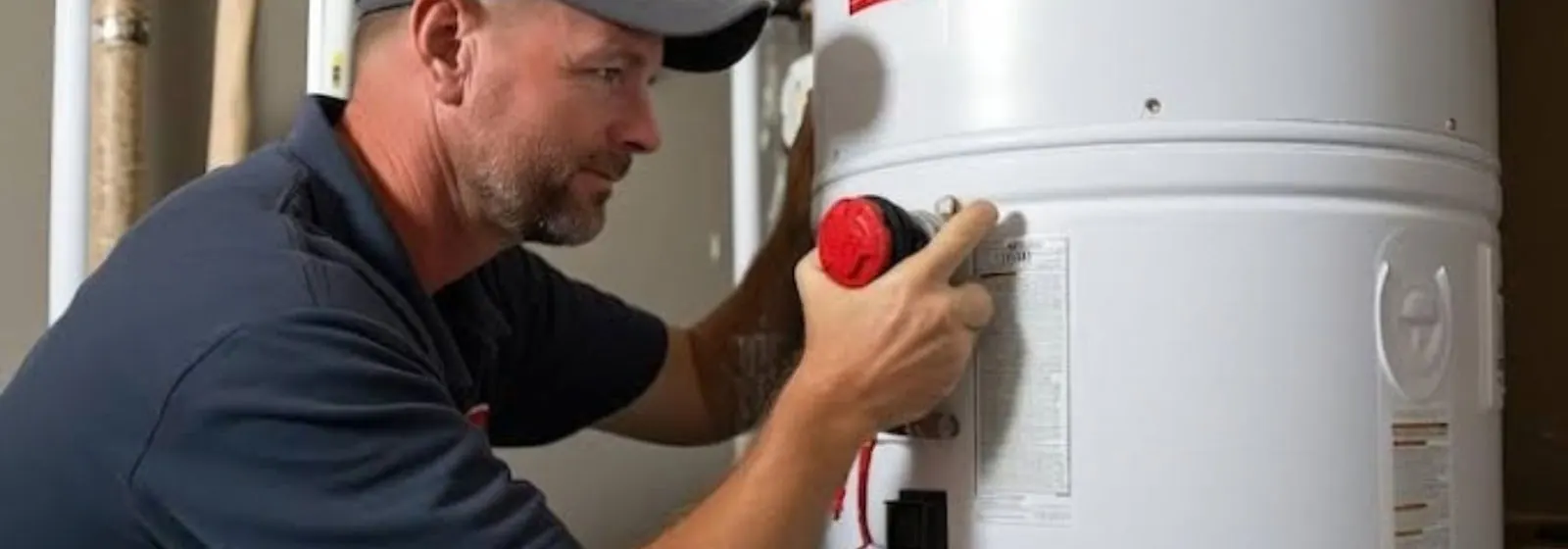
If your tank has started leaking or the water has gone lukewarm, you probably want one answer first: how long will the house be without hot water? For a standard tank-for-tank swap, the work itself often takes a few hours on site. A straightforward job is mostly draining, disconnecting, setting, connecting and refilling.
The number moves when the job is not like-for-like. A different fuel type, a new vent path, a missing expansion tank or a corroded shutoff valve can each add real time. Knowing which of those apply to your house lets you plan the day instead of guessing.
This guide walks through a typical water heater replacement visit in order, then shows the factors that lengthen it and how to keep the household running while the tank is out.
What happens during a swap, in order
Shut down and drain
The plumber closes the cold supply, cuts power or gas to the unit, and connects a hose to the drain valve. A 40 or 50 gallon tank can take a while to empty, and sediment often slows the flow.
Disconnect and remove
Water lines, the gas flex or electrical whip, and the vent connection come off. The empty tank is then walked out, which can be tricky on basement stairs.
Set and connect
The new tank goes on its pan or stand, then new flex connectors, a dielectric fitting or union where needed, and the T&P relief valve and discharge line are installed.
Fill, test and relight
The tank fills with a hot tap open so air escapes. Joints get checked for weeping, gas joints get a leak test, and the burner or elements are brought up to temperature.
Add up those four stages and a clean job commonly lands somewhere in the range of two to four hours of hands-on work. The reheat period afterward is separate. A full tank still needs time to climb to temperature before showers feel normal again.
The drain step is slower than people expect
Draining sounds trivial, yet it is where many visits lose their first half hour. A garden hose runs downhill by gravity, so a floor drain, a sump pit or a laundry sink must sit lower than the tank outlet or the water has nowhere to go.
Sediment is the other drag. In a tank that has been running for ten years or more, mineral flakes can clog the drain valve opening, and the plumber may need to pop the valve open with a tool or flush through the cold inlet to push the debris out. A tank that was never flushed drains slowly and unevenly.
If you can, tell the plumber where the nearest floor drain is and whether the drain valve has ever been used. That small detail helps them bring the right hose length and a pump if the drain is above the tank.
Venting, expansion tank and gas test: the parts that add time
A gas water heater vents through a flue, and the vent pipe must slope upward and connect tightly at every joint. If the old vent is rusted through, undersized for the new unit or missing the proper clearance to combustibles, it gets corrected before the burner is lit. That can add an hour or more.
An expansion tank absorbs the pressure that builds when cold water heats up inside a closed system. If your home has a check valve or pressure-reducing valve on the main, thermal expansion has nowhere to go, so the tank is a standard safety part. Adding one means a new tee, a support bracket and setting the tank air pressure to match the line pressure.
The gas test comes last and cannot be rushed. Every new fitting on the gas line is checked with leak-detection solution or an electronic sniffer, and the pilot or igniter is proven before the plumber leaves. If you ever smell gas, leave the building first, then call 911 from outside.
Model codes such as the UPC and IPC set how piping, venting and fixtures are installed, though the version in force can differ by jurisdiction, so check with the Building Division before work starts. Any dedicated circuit follows the National Electrical Code (NEC) as adopted locally, so the electrical permit is separate from the plumbing one.
What lengthens a replacement, and how much
| Situation | Effect on the visit | What you can do ahead of time |
|---|---|---|
| Same fuel, same size, same spot | Shortest path, often a few hours | Clear a 3 foot path to the unit |
| Switching gas to electric, or the reverse | New circuit or gas line work, often a longer day | Ask an electrician about panel space before booking |
| Corroded shutoff or seized unions | Extra time cutting out and replacing fittings | Mention any valve that has never moved |
| Vent pipe needs changing | Added hour or more, parts run possible | Photograph the flue and send it ahead |
| Tight closet or attic install | Slower handling of the tank and pan | Remove stored boxes and shelving |
| Tank upgrade to a larger size | Pan, vent and gas sizing checks add steps | Share household size and peak use |
A moved unit is the biggest wildcard. Relocating a heater from a closet to a garage wall means new supply lines, a new vent route and often a fresh permit review, so treat that as a multi-day project, not a morning swap.
Getting through a day without hot water
Same-day plan
- Shower the night before and fill a kettle or two
- Wash dishes before the plumber arrives
- Keep pets and kids out of the utility area
- Expect cooler showers for a short reheat window
If the job stretches overnight
- Heat water on the stove for basic washing
- Use cold-water laundry settings until the tank is hot
- Ask whether the cold supply can stay open to the house
- Plan one meal that avoids hot dishwater
Same-day appointments are available when the schedule allows, so mention the loss of hot water when you call. A leaking tank is also worth shutting off at the cold inlet and the gas or power switch while you wait, so more damage does not pile up.
Wheat Ridge note: permits and the Building Division
Water heater replacement often involves a permit and an inspection, and that adds a separate piece of scheduling. Permit rules vary, so ask the Wheat Ridge Building Division what your address needs before you pick a day. The permit desk is at (303) 235-2855, option 1, and permits go through the city's OpenGov portal.
Under the State permits page, when you hire a plumbing contractor, the contractor is responsible for obtaining the permit. That means you should not be pulling it yourself, but you can ask who submits it and when. The City licenses plumbing contractors in a Class 4 category that covers water heater installation, so ask for that licence when you compare bids.
Where an inspection is required, an adult must be present for occupied dwellings. Pick a day when someone will be home, and ask whether the inspection visit is the same day or comes later, because that decides whether the job feels finished on Friday or the following week.
Common questions
How long does it take to replace a 40 gallon tank water heater?
A like-for-like swap commonly takes about two to four hours of work on site. Draining, a stubborn drain valve or vent corrections can add more, and the reheat after the fill is on top of that.
Can I use hot water right after the new tank is installed?
Not immediately. The tank has to heat a full fill of cold water, and gas units typically recover faster than electric ones. Ask the plumber for a rough reheat window for your unit, and expect lukewarm water first.
Does a water heater replacement need a permit?
Often it does, but rules differ by city. Ask the Wheat Ridge Building Division before the work. When a contractor is hired, the State says the contractor is responsible for pulling the permit.
Is replacing and installing a water heater the same job?
They overlap. Replacement removes the old tank and sets a new one. New water heater installation where no heater existed means more supply, venting or gas work and takes longer.
Why would a Wheat Ridge replacement take longer than a quote suggested?
Hidden conditions are the usual cause: a seized shutoff, a rusted vent, or a missing expansion tank that must be added. A plumber who sees the setup first can flag these early. You hear the price before work starts, and changes get explained.
What if my landlord owns the building?
Tenants should tell the landlord or property manager right away, since the owner usually arranges and approves the work. Managers handling several units can call (303) 552-3896 to schedule the swap with a clear price first.