
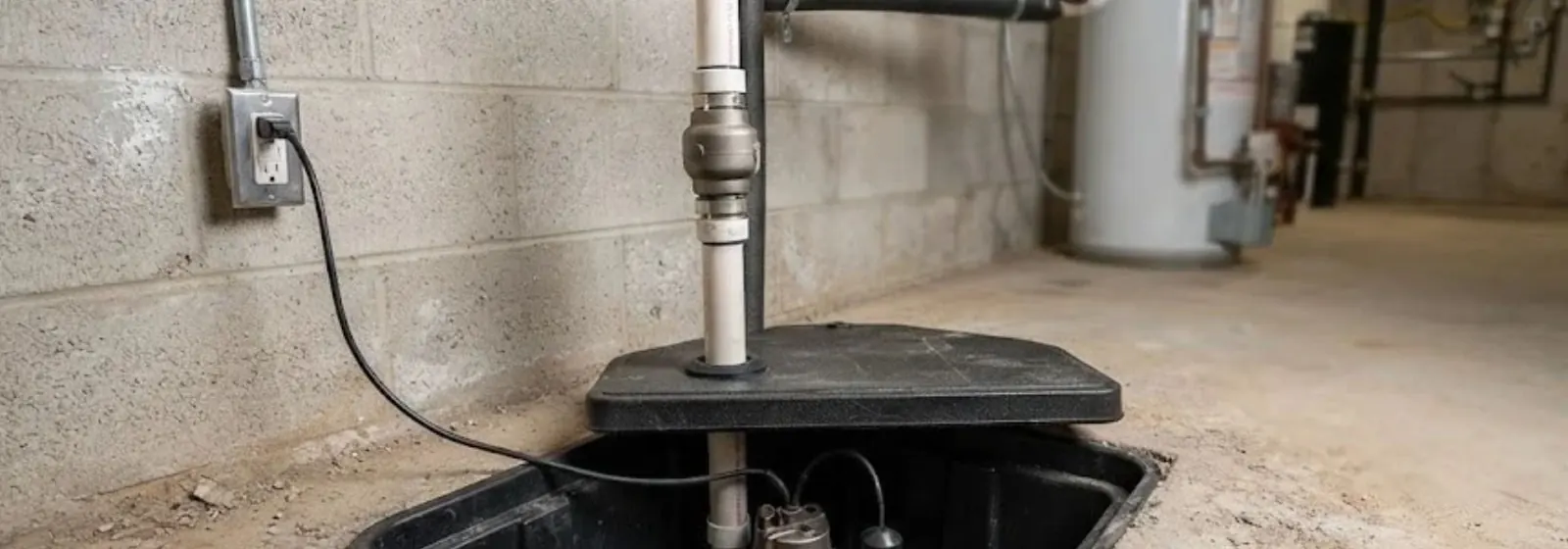
Sump pump alarm installation adds a warning layer to a pit that otherwise works out of sight. The pump runs, the water leaves, and you never think about it until a stuck float or a tripped breaker leaves the basin filling with nothing to empty it.
An alarm does not move water by itself. It tells you when water has climbed past the normal pump-on level, so you have time to reset a breaker, clear a jam or call for sump pump service before the floor is wet.
This guide covers the alarm types, how floats and backups work, which outlet and valve details matter, and a decision table to match your basement to a setup. It also covers testing and the rules to check before you dig any discharge line.
Match the alarm to your basement
| Your situation | Alarm choice | Why it fits |
|---|---|---|
| Finished basement, you are home most days | Audible high-water alarm on its own float | Loud, simple and independent of the pump switch |
| Away often, travel, rental property | Wi-Fi or cellular alarm with phone alerts | Sends a message when nobody can hear a buzzer |
| Power outages are a worry | Battery backup pump with its own alarm | Keeps pumping and warns that the primary has stopped |
| Older pit, pump cycles constantly | High-water alarm plus a pump inspection | A busy pump may be undersized or have a bad check valve |
| Pit is shallow or cramped | Compact tethered or vertical float alarm | Fits tight basins without snagging on the pump |
None of these replaces a working pump. They are early notice, and early notice is what gives you a few extra minutes to bucket water out or shut off a nearby appliance.
High-water alarms and float switches, explained
A float switch is a buoyant arm or a tethered ball that rises with the water and closes a circuit. Your pump already has one. A high-water alarm uses a separate float mounted a few inches above the pump-on level, so it only sounds when the primary system has failed to keep up.
Mounting height matters. Too low, and the alarm chirps every time heavy rain makes the pump cycle. Too high, and you get almost no warning before the pit overflows. The usual target is a point comfortably above the normal switch-on level and still well below the lip of the basin.
Tethered floats need room to swing, and a cord that tangles with the pump discharge pipe can pin the float up or down. A short zip tie or a bracket that holds the cord in place avoids a false alarm or a missed one.
How the alarm goes in
Check the pit
Clear debris, confirm the pump sits level in its basin, and note the water level where the pump normally switches on.
Mount the sensor
The alarm float is clamped to the discharge pipe or a bracket at the chosen height, with the cord kept clear of the primary float.
Power it right
The control box plugs into a separate GFCI-protected receptacle or runs on batteries, so a tripped outlet does not silence both pump and alarm.
Test under load
Water is added to the pit until the alarm sounds, then the pump is watched through a full cycle to confirm it clears the basin.
Battery backup and Wi-Fi alarms
A battery backup system pairs a second pump, often a smaller DC unit, with a deep-cycle battery and a charger. When mains power fails or the primary pump dies, the backup takes over. Most are sized to run for a limited number of hours, so a long outage can still drain the battery.
Wi-Fi alarms add phone alerts to the same float sensor. They are handy for second homes and rentals, though they need a router signal strong enough to reach the basement and a power source for the unit. Many also report a dead battery or a lost connection, which is a useful extra warning.
If you manage rental units, one alarm per pit and a written test schedule gives tenants and owners the same information. Mention it when you call (303) 552-3896 so the plumber can bring matching hardware.
Outlets, check valves and the discharge pipe
Pump outlets should be GFCI protected, ideally on a dedicated circuit, and the cord should plug in with a drip loop so water cannot run down it into the receptacle. If the outlet trips often, the cause may be moisture or a failing pump motor, and an electrician should look at it. Do not bypass the GFCI.
A check valve sits on the discharge pipe just above the pump. It stops water in the vertical pipe from falling back into the pit each cycle. A failed valve makes the pump short-cycle and can raise the water level in the pit, which sets off the alarm even when the pump runs normally. A small weep hole drilled below the valve prevents airlock in some setups.
The discharge line should run away from the foundation and end where the water cannot flow back toward the wall. A pipe that freezes solid in winter, or a hose end that is crushed under snow, can trap water in the line. If your basement already shows signs of moisture, consider basement waterproofing as a longer-term fix.
Work on supply and drain lines follows a model code such as the UPC or IPC as adopted locally, and the Wheat Ridge Building Division is the source for the edition and any amendments.
Wheat Ridge note: creeks, lakes and where discharge goes
Wheat Ridge sits near Clear Creek and Lena Gulch, with lakes such as Crown Hill Lake, West Lake and Tabor Lake nearby. That is geography, not a forecast of water in any one basement. A heavy storm can still overwhelm a pump on a high lot, so test your alarm before spring runoff and monsoon storms, whatever the map shows.
Where the discharge pipe ends is a rules question, not just a plumbing one. Discharge rules vary, so ask the Wheat Ridge Building Division and your district what is allowed for your address. The permit desk is at (303) 235-2855, option 1. Sending pit water to a place that is not permitted can create problems with neighbors and utilities.
If a new discharge line means trenching, call Colorado 811 at least three business days before you dig. It covers public utilities only and tells you where those lines are buried. Hand tools are required within 18 inches of a mark, and private lines are not marked, so ask your plumber how to locate those.
Common questions
Does a sump pump alarm need its own outlet?
It is best on a separate GFCI-protected receptacle, or on battery power. If the alarm shares the pump outlet and the outlet trips, both go quiet at once, and that defeats the purpose.
How often should I test the alarm and pump?
A common habit is every few months and before the wet season. Pour water into the pit until the float rises, listen for the alarm, and confirm the pump clears the basin and shuts off.
Why does my sump pump alarm keep going off?
Common causes are a high-set float, a tangled cord, a failed check valve, a pump too small for the inflow, or a frozen discharge line. A plumber can trace which one by watching a cycle.
Can I add a sump pump alarm myself?
Plug-in battery alarms with a clip-on float are a reasonable DIY job. Anything involving new wiring, a new circuit or a battery backup pump is safer with a licensed plumber and an electrician.
What Wheat Ridge rules apply to sump pump discharge?
Discharge rules vary, so ask the Wheat Ridge Building Division and your water or sanitation district before you route a line. Call 811 before any digging, and ask before tying into any sewer line.
Do you install alarms in Arvada too?
Yes. Our plumbers serve Wheat Ridge and nearby towns, including Arvada.