
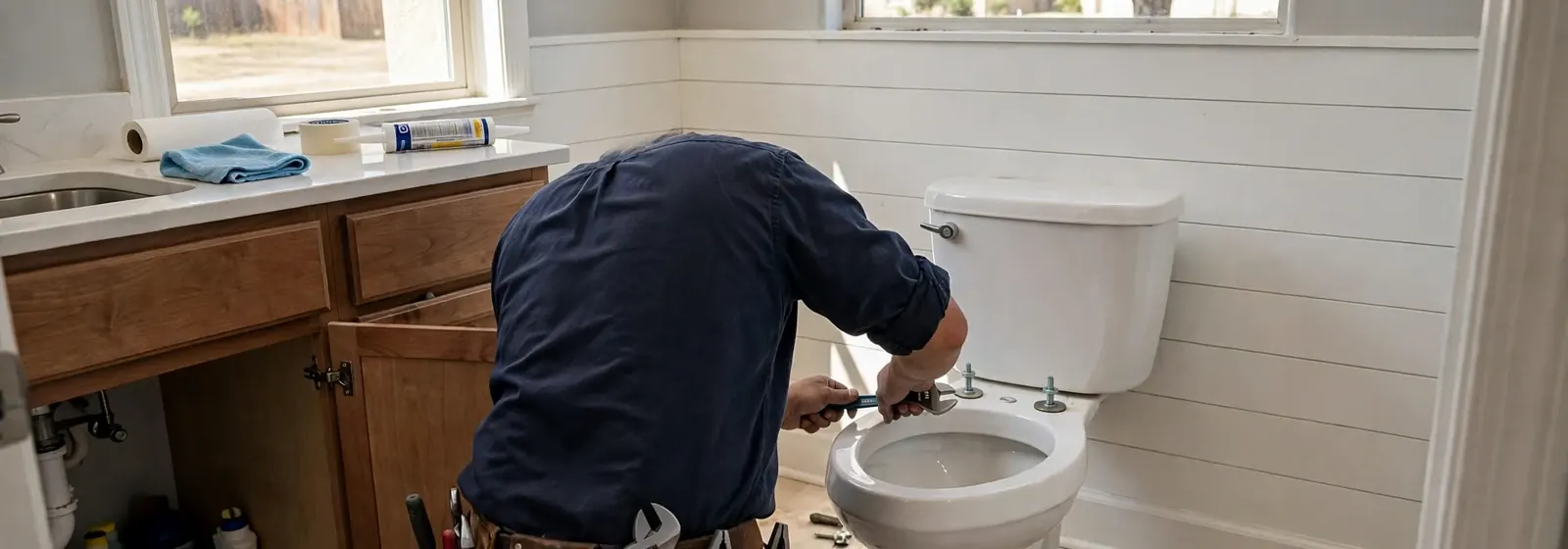
The wax ring is a thick, soft gasket that sits between the bottom of the toilet and the drain flange on the floor. Its only job is to keep flush water and sewer gas inside the pipe. When it flattens, cracks or gets pushed out of place, the toilet bowl seal fails and the bathroom pays for it.
A leak at the base can look like a dozen other problems, from a sweating tank to a dripping supply line. Before you spend a weekend lifting a 60 pound fixture, it helps to read the clues and know what a proper toilet repair actually involves.
Below you will find the warning signs, the full pull-and-reset sequence, how to judge the flange and subfloor, and the quick tests that separate a seal leak from a hidden plumbing leak somewhere else.
Signs the bowl seal has stopped sealing
No single sign proves a bad ring, but two or three together point strongly that way.
Water at the base
Moisture appears around the foot of the bowl after flushing, not just after a shower. The puddle is often clear and sometimes smells faintly of sewage.
A toilet that rocks
Gentle side-to-side movement on the floor breaks the compressed wax. Loose closet bolts, a warped floor or a bad flange can all cause the movement.
Sewer smell near the floor
A seal that no longer closes lets sewer gas rise past the bowl. The odor is usually strongest right after a flush.
Stained or soft flooring
Dark vinyl edges, lifting tile grout or a spongy spot around the base suggest water has been seeping for a while.
Ceiling stain below
A brown mark on the ceiling under an upstairs bathroom can trace back to a seal leak that has run for weeks.
Pulling the toilet and setting a new seal
Shut off and empty
Close the angle stop, flush, and sponge out the tank and bowl. A wet-dry vacuum gets the last of the water from the trapway.
Disconnect and lift
The supply line comes off, the closet bolt caps and nuts are removed, and the toilet is lifted straight up and set on a towel or cardboard.
Scrape and inspect
Old wax is scraped from the flange with a putty knife. A rag is stuffed in the pipe to stop gas, and the flange, bolts and floor are checked closely.
Set, bolt and test
A new ring or wax-free seal goes on, the bowl is lowered in one motion, bolts are snugged evenly, and a few flushes with a dry paper towel at the base confirm a tight joint.
Everything depends on that last step. Tightening one side of the bowl hard can crack the porcelain, so the nuts are turned a little at a time, alternating left and right, until the bowl sits without rocking.
Flange condition decides how the repair goes
The closet flange is the ring on the floor that the toilet bolts to, and it must sit level with or slightly above the finished floor. If new tile or vinyl raised the floor but not the flange, the ring cannot compress and a leak returns.
Flanges come in PVC, ABS, cast iron and brass. A cracked plastic flange can often take a repair ring screwed down over it. A rusted cast iron flange with broken bolt slots may need a replacement that ties into the pipe below, which is a bigger job.
Closet bolts are the cheap parts that cause expensive problems. Stripped or rusted bolts let the bowl shift, and a shifting bowl crushes the ring every time someone sits down. Brass or stainless replacements are standard and cost very little compared with a repeat leak.
Wax ring or wax-free seal: which fits your setup
Standard wax ring
- Familiar, easy to find, forgiving on slightly uneven flanges
- Single use, so it is replaced every time the bowl is lifted
- Extra-thick versions help when the flange sits a little low
- Messy to scrape off but simple to install correctly
Wax-free rubber seal
- Reusable and clean to handle during a repair
- Often tolerates a bit of movement in the bowl
- Needs a reasonably round, intact flange to seat well
- Costs more but can help in awkward replacements
Neither seal fixes a broken flange or a rotting floor. Think of the seal as the final gasket, not the foundation, and judge the flange first.
Subfloor damage and when the leak is not the seal
Once the toilet is up, press a screwdriver tip into the plywood around the flange. Wood that gives easily or smells musty has been wet for a long time and needs cutting out and patching before the bowl goes back. Setting a new seal on soft wood just repeats the failure.
Sometimes the base is dry and the water is coming from higher up. A cracked tank, a loose tank bolt, a dripping supply line or a sweating tank can all drip down the porcelain and look like a bad seal. Dry the bowl completely, wrap toilet paper at each joint, and watch which spot gets wet first.
When the floor stays damp even after the seal, flange and fittings check out, a hidden supply or drain line may be leaking nearby. That is where professional leak detection with moisture meters or acoustic gear saves you from tearing up a whole bathroom floor.
Pipe sizing, venting and trap rules come from model plumbing codes like the UPC and IPC, which each city adopts in its own form, so permit rules vary and the Building Division has the answer.
Wheat Ridge note: confirming a hidden leak with your meter
Water in Wheat Ridge comes from one of four providers, so your bill tells you who reads your meter. The city lists Denver Water, Consolidated Mutual, Valley Water and Wheat Ridge Water District. Check the name on your bill before you call anyone about usage.
A simple meter test helps you tell a seal leak from a hidden leak. Turn off every fixture, including the ice maker, then look at the leak indicator on your meter. If it keeps spinning, water is moving somewhere you cannot see. The Wheat Ridge Water District office is at 6827 W 38th Ave and answers at (303) 424-2844, and your own provider can explain how to read your meter.
A seal leak normally drips on the floor during flushes and stops between them, so the dial usually stays still once the toilet has refilled. Pair the meter test with a dye tablet in the tank. If color shows in the bowl without a flush, you have a flapper leak instead, and that is a different repair.
Common questions
Can I just tighten the closet bolts instead of replacing the wax ring?
Tightening can stop a wobble for a day or two, but it does not restore a seal that has already flattened or split. Overtightening can also crack the bowl. If water has reached the floor, the ring is usually due.
How long does a wax ring replacement take?
A straightforward swap on a sound flange and dry floor often takes around an hour. Flange repairs or subfloor patching add time, and tile floors that need lifting add more.
Do I need a permit to reset a toilet?
Simple fixture resets are often treated differently from new plumbing, but permit rules vary, so ask the Wheat Ridge Building Division. A repair that moves or replaces drain pipe may be handled differently.
How do I check for a hidden toilet leak in Wheat Ridge before calling a plumber?
Shut off all water fixtures, then watch the leak indicator on your meter for a few minutes. Add dye to the tank and wait for color in the bowl. If the meter moves and the dye stays put, the loss is somewhere else.
Is it safe to keep using a leaking toilet?
A short-term pause is wiser. Each flush pushes water into the subfloor, and sewer gas can escape. Close the angle stop if the base is wet and call (303) 552-3896 to schedule a repair, especially if you manage a rental.
Do you repair toilets outside Wheat Ridge city limits?
Yes. Our licensed plumbers serve Wheat Ridge and nearby towns, and the same repair applies in Arvada homes to the north.